Mercerized Cotton Crochet Thread: Complete Guide
Learn how mercerized cotton crochet thread is made, how to choose a size, which hooks and stitches suit it, and how to care for delicate thread projects.
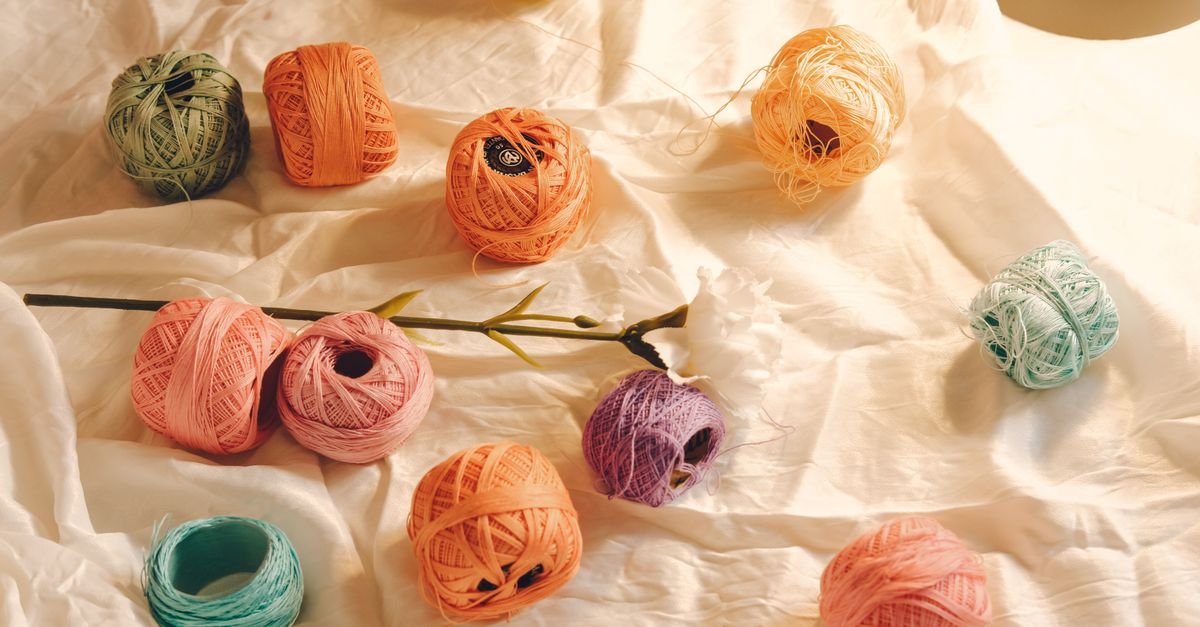
Mercerized cotton crochet thread has a smooth, polished look that makes fine crochet feel especially crisp and refined. It’s a favorite for lace, doilies, ornaments, jewelry, appliqués, edging, and detailed home décor, but it can also feel unfamiliar if you usually crochet with plump yarn. In this complete guide, I’ll explain what makes mercerized cotton crochet thread different, how to choose a thread size, how to manage tension, and which projects are good places to begin.
Thread crochet rewards patience. The fabric grows slowly, the stitches are small, and every loop is visible. That may sound intimidating, but it also gives us wonderful control over texture and shape. Once you understand how the thread behaves, you can explore delicate motifs without treating every project like a mystery.
Table of Contents
What is mercerized cotton crochet thread?
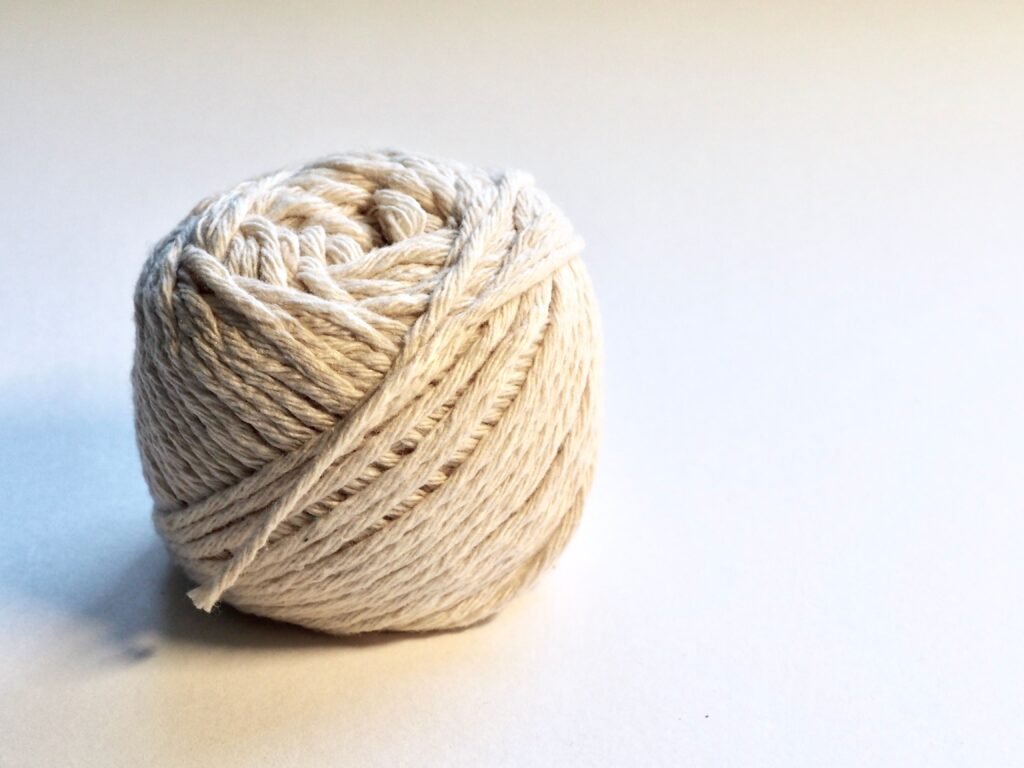
Mercerized cotton crochet thread is cotton thread that has undergone a finishing treatment designed to give it a smoother surface, a subtle sheen, and a more polished appearance.
The mercerizing process changes the character of the cotton, but it does not turn thread into a different fiber. It remains cotton, so the finished fabric still has the qualities associated with cotton crochet: a defined structure, a comparatively stable shape, and a surface that shows stitch detail clearly. The treatment makes the thread look more lustrous and can make it glide differently over your hook and fingers.
That smooth finish is one of the main reasons crocheters choose it. Tiny shells, picots, chain spaces, and clusters stand out neatly, especially when worked in a clear, solid color. A pale thread can make lace motifs easy to inspect, while a deeper shade can give small ornaments a more dramatic outline.
Mercerized thread is not automatically the right choice for every project. Its fine structure can take longer to work, and its smoothness may reveal uneven tension more readily than a thicker, forgiving yarn. I see that as an invitation to slow down rather than a reason to avoid it.
How is mercerized cotton crochet thread different from yarn?
Mercerized cotton crochet thread differs from ordinary yarn mainly in its finer scale, smoother finish, and ability to create lightweight fabric with very small stitches.
“Thread” and “yarn” are not always used in exactly the same way by every manufacturer or crocheter, so the label is your best guide. Look for the thread’s size information, recommended hook range, care instructions, and any gauge information supplied for the intended project. Avoid choosing solely by the color or the photograph on the package.
Compared with bulky yarn, thread gives you more delicate detail and less visual mass. A small flower worked in thread can become an earring, appliqué, card embellishment, or ornament, while the same idea in a thicker yarn may become a toy or decorative motif. If you want inspiration for small-scale floral work, this five-petal crochet flower pattern offers a useful example of how a simple motif can be assembled into a finished shape.
The smaller scale also changes how you hold the work. I recommend supporting the fabric with your non-hook hand without pinching it tightly. Let the thread feed smoothly, and pause often to relax your fingers. A cramped grip can affect stitch height and make a long lace project unnecessarily tiring.
Another difference is the way the fabric communicates mistakes. In a thick yarn, a missed loop may be obvious because the shape changes quickly. In fine thread, the error can hide inside a detailed motif. Frequent counting and good lighting are practical tools, not signs that you’re struggling.
How do thread sizes and hook choices work?

Thread sizes and hook choices work together: the thread label and pattern should guide your starting point, while a swatch or small test motif confirms whether the fabric has the right openness and firmness.
Thread numbering can feel counterintuitive because the number may describe the fineness rather than functioning like a simple “small, medium, large” label. Do not assume that a higher or lower number means what it would mean for yarn weight. Read the manufacturer’s information and follow the pattern’s terminology.
The recommended hook is equally important. A very small hook can create firm, compact stitches, while a larger hook can open the spaces and make the fabric more flexible. Neither is universally better. The right choice depends on the pattern and the fabric you want.
When substituting thread, make a small sample using the main stitch pattern. For a lace project, a plain chain sample may not tell you enough. Work at least one motif, repeat, or shaped section so you can see whether the thread supports the design.
- Use the pattern’s recommendation first: It gives you a reliable starting point for the designer’s intended fabric.
- Check the stitch definition: You should be able to identify stitch tops, spaces, and joins without forcing the fabric flat.
- Watch the drape: The sample should move in a way that suits the project rather than feeling unexpectedly rigid or floppy.
- Consider your tension: If you crochet tightly, a hook adjustment may be necessary, but change only after making a controlled test.
Thread crochet often becomes easier when I separate “what the label recommends” from “what my hands are doing.” The label gives us a starting point; the sample tells us whether our individual tension is producing the fabric we need.
Which projects suit mercerized cotton crochet thread?
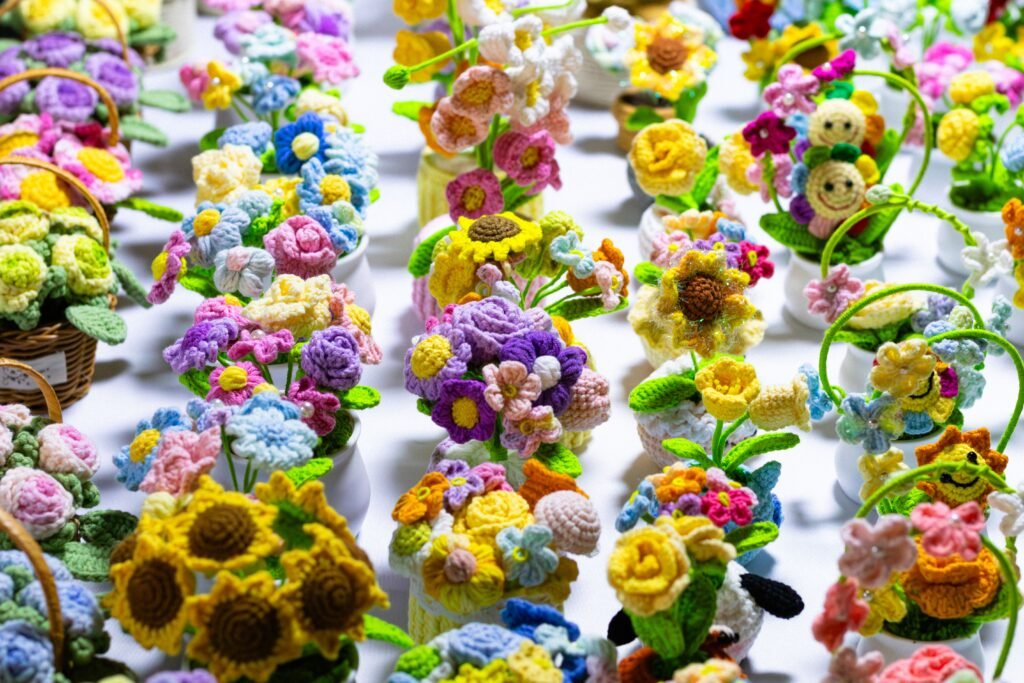
Projects that suit mercerized cotton crochet thread include lace motifs, doilies, table accents, ornaments, jewelry, decorative edging, small flowers, bookmarks, and fine appliqués.
Lace is a natural match because the smooth thread keeps chain spaces and open patterns distinct. Doilies and decorative mats can showcase the thread’s sheen, while small motifs let you experiment without committing to a large project. Thread is also useful when you want a slim border around a cloth or a carefully defined detail on a larger crochet piece.
Small flowers are a friendly starting point because they let you practice tension, increases, decreases, and joining in a manageable space. If your first motif feels too tight, try a slightly larger hook or loosen your grip before changing the whole pattern.
You can also use thread for tiny accessories. A project may become a pendant, bracelet, hair decoration, brooch, or ornament after you add a suitable finding or attachment. The pattern itself may not have been designed for that purpose, so consider how the finished piece will be handled before choosing the final construction.
For crocheters who enjoy trying different stitch structures, a guide to beautiful crochet stitches can spark ideas for translating texture into a finer scale. Some stitch patterns become especially delicate in thread, while others need adjustment because their spaces or raised details become too dense.
Thread can also add detail to wearable projects, although it is important to consider comfort and care. A fine crocheted trim may work well around an edge, but a dense thread fabric may not feel suitable everywhere on clothing. Think about the part of the item that will touch skin, bend, stretch, or receive repeated handling.
How do you crochet with mercerized cotton thread comfortably?
You can crochet with mercerized cotton thread comfortably by improving your lighting, relaxing your grip, keeping a steady feed of thread, and taking regular breaks.
Good lighting makes a noticeable difference. Choose a position where the thread, hook, and stitch tops are easy to see without leaning forward. If your eyes or shoulders begin to feel strained, pause rather than pushing through a difficult section.
Hold the hook in the way that feels natural, but avoid squeezing it. A relaxed pencil or knife hold can both work; the important point is that your wrist and fingers can move freely. Thread is small enough that a tight grip can quickly turn into hand fatigue.
Keep the working thread moving smoothly. If it catches on jewelry, rough nails, or a textured surface, the tension can change from one stitch to the next. A yarn bowl or thread holder may help some crocheters keep the ball from rolling, but any container that allows the thread to feed without snagging can serve the same purpose.
Use stitch markers when a pattern has a clear round beginning, repeated sections, or a center point. With fine thread, markers can prevent you from counting the same small stitches repeatedly. Place them where the instructions indicate and move them as the work grows.
Finally, make breaks part of the project. Thread crochet is a slow craft, and there is no benefit in racing. Stretch your fingers, lower your shoulders, look away from the close work, and return when your hands feel ready.
How can you keep tension even with fine thread?
You can keep tension even with fine thread by maintaining a consistent loop height, avoiding a tight grip, checking the work frequently, and comparing repeated motifs as you go.
Mercerized cotton’s smooth surface can slide easily, so the working loop may change size if you pull sharply. Try to lift each loop to a similar height on the hook. The goal is not to create identical movements with robotic precision; it is to avoid dramatic changes between stitches.
Count the stitches and spaces at natural checkpoints. In a motif, that may mean checking after each round. In a long row, you might count after each repeat. Finding an error immediately is much simpler than locating it after several dense rounds.
If you are making several identical pieces, complete a sample first and use it as a visual reference. Compare the size, center opening, and shape of each new motif with the first one. Small differences may not matter for a casual embellishment, but matching matters when you are making earrings, joined lace squares, or a pair of appliqués.
Blocking can help reveal the final shape of lace, but it should not be used to hide a major tension problem. Follow the pattern and fiber-care guidance for the project. Work gently, especially with tiny picots and open loops, because pulling too forcefully can distort the fabric.
What stitches and techniques work well with cotton thread?
Chain spaces, single crochet, double crochet, treble crochet, picots, clusters, increases, decreases, and joined rounds all work well with cotton thread when the pattern is designed for the chosen scale.
Open stitches create airy motifs, while shorter stitches provide structure around edges and centers. Picots add pointed detail to borders and flower petals. Clusters can produce a raised or grouped effect, but they may become visually crowded if the thread, hook, and tension create a very compact fabric.
Tall stitches can open a design quickly, which is useful for lace but important to monitor around shaping. A pattern that alternates stitch heights may rely on a particular rhythm, so avoid substituting stitches casually. If you want to study how a taller stitch changes the fabric, compare the instructions in this extended double crochet guide with a small thread swatch before adapting it.
Working in rounds requires careful attention to joins. Check whether the pattern tells you to slip stitch, turn, or continue without joining. Mark the first stitch or space when necessary, and read the next round before fastening off or changing direction.
Thread also gives you a good opportunity to practice invisible or tidy finishing. Weave in ends gradually and securely, following the pattern’s instructions. Avoid pulling the tail so tightly that the motif puckers.
How do you choose colors and plan substitutions?
You should choose colors and plan substitutions by considering stitch visibility, the pattern’s scale, the intended use, and the care instructions for the finished piece.
A solid, medium-light color is often easiest for learning because you can see the loops clearly. Very dark colors can make fine stitches harder to inspect, while a multicolored thread may disguise the boundaries between repeats. Once you’re comfortable, variegated or contrasting shades can add their own rhythm to a simple motif.
When substituting thread, compare more than color. Check the thread’s size, surface, construction, and care information against the original recommendation. A substitution that looks similar in the skein or ball may create a different fabric when crocheted.
Make one complete motif before purchasing or preparing enough thread for a large project. This lets you check whether the scale suits your purpose and whether the color behaves as expected in the stitch pattern. It also gives you a useful sample for planning borders or joining.
If you enjoy exploring color in wearable crochet, you can browse a crochet socks pattern guide for broader ideas about stripes, contrast, and how color placement can separate sections. Thread projects are smaller, but the same planning habit applies: make notes before repeating a color sequence.
How do you care for mercerized cotton crochet thread projects?
You should care for mercerized cotton crochet thread projects by following the thread label and pattern guidance, handling delicate lace gently, and storing finished pieces so they are not crushed or snagged.
Care instructions can vary, so do not assume that every cotton thread project should be washed in the same way. Check the information supplied with your thread and consider the finished item’s construction, especially if it includes attachments, stiffening, beads, or other materials.
Before washing a delicate piece, inspect the joins and woven-in ends. A loose end that seemed harmless can become a problem when the fabric is moved while damp. Handle the item carefully and avoid aggressive rubbing or twisting.
For lace and shaped motifs, gentle blocking may help the fabric settle into its intended outline. Use the method appropriate for the project and avoid stretching beyond the shape supported by the stitches. Allow the piece to dry fully before storing it.
Store thread crochet flat or in a way that protects it from snagging. Keep it away from rough closures, sharp objects, and crowded storage where small picots can catch. If you are storing an heirloom-style piece, fold it with care and check it occasionally rather than leaving it compressed indefinitely.
For larger handmade layers, yarn and construction choices become even more important. Exploring crochet poncho free patterns can help you compare how stitch density, drape, borders, and care considerations change when a project grows beyond a small motif.
What common mistakes should you avoid?
You can avoid common mercerized cotton crochet thread mistakes by reading the pattern carefully, checking terminology, counting repeats, and testing substitutions before starting the full project.
- Choosing by color alone: A matching shade does not guarantee a matching thread size or fabric.
- Skipping the sample: Fine thread can produce a very different result when your tension changes.
- Holding the thread too tightly: This can create stiff stitches and unnecessary hand fatigue.
- Missing a chain space: In lace, one missed space can affect several later rounds.
- Ignoring terminology: Check whether the pattern uses US or UK stitch terms and follow its abbreviation key.
- Pulling the finishing ends too hard: Tight ends can pucker an otherwise even motif.
If you spot an error, stop and locate the earliest round where the stitch count changed. Unraveling a short section is usually easier than trying to disguise an incorrect repeat later. Keep your notes beside the project, especially if you are working from a chart or returning after a break.
And remember that a project does not have to be large to teach you something useful. A small flower, border, or bookmark can help you learn how your hands handle fine thread before you move into more elaborate lace.
What should you try next with mercerized cotton crochet thread?
Your next step with mercerized cotton crochet thread is to choose a small motif, follow the recommended hook and thread information, and make a test piece before committing to a larger design.
Begin with a clear pattern and a color that makes the stitches easy to see. Practice the main repeat slowly, mark the beginning of rounds, and count as you go. If the work feels too tight, adjust your grip before changing the pattern. If it still feels uncomfortable, test the next hook size suggested by the pattern or make another small sample.
Once you understand the thread’s rhythm, try a border, lace motif, flower, ornament, or joined square. Let the smooth finish highlight the stitch structure rather than forcing the thread into a project that needs a different kind of fabric. With patient hands and careful counting, this fine material can open up a wonderfully detailed side of crochet.