Crochet Projects for Beginners: Easy Ideas to Try
Discover easy crochet projects for beginners, from simple coasters and scarves to useful accessories, with yarn, stitch, and finishing tips.
Finding the right crochet projects for beginners can make learning feel much more enjoyable. When a project is simple enough to follow but useful or creative enough to keep us interested, each row becomes a chance to build confidence. I like beginning with clear shapes, familiar stitches, and manageable finishing steps, then gradually adding new techniques as the basics start to feel natural.
You don’t need a large yarn collection or an ambitious pattern to begin. A small amount of yarn, a comfortable hook, and a little patience can take you from your first chain to a finished handmade item. In this guide, I’ll share easy project ideas, practical ways to choose a pattern, tips for avoiding common beginner frustrations, and gentle next steps when you’re ready to explore further.
Table of Contents
How should you choose crochet projects for beginners?
You should choose crochet projects for beginners by looking for simple construction, familiar stitches, clear instructions, and a finished size that feels manageable. The best first project is not necessarily the tiniest one or the most popular one; it’s the project that gives you room to practice without making every part of the process feel complicated.
Before choosing, think about what you want to learn. If you’re still practicing chain stitches and turning, a flat rectangle is a friendly place to start. If you already feel comfortable with basic rows, you might enjoy a hat, small pouch, or simple basket that introduces rounds. If color is what excites you, choose a project with stripes or separate motifs while keeping the stitch pattern uncomplicated.
- Choose a flat project if you want to concentrate on stitch placement and even rows.
- Choose a small accessory if you want a useful finished object without a long time commitment.
- Choose a motif if you enjoy color changes and repeating shapes.
- Choose a project worked in rounds when you’re ready to practice increases, decreases, or joining.
- Choose a wearable only when you feel comfortable checking measurements and making adjustments.
It also helps to read the entire pattern before picking up your hook. Look for a stitch abbreviation guide, explanations of turning chains, finished measurements, and notes about whether the pattern uses US or UK terminology. If crochet vocabulary is still new, the crochet guide for absolute beginners is a useful place to review the basic movements and terms.
Which simple crochet projects are best for a first try?
The best simple crochet projects for a first try are flat rectangles, small squares, basic coasters, washcloths, bookmarks, and uncomplicated scarves. These projects let you practice the rhythm of crocheting while keeping shaping and assembly to a minimum.
Washcloths and simple squares
A washcloth or small square gives you a straightforward way to practice rows. You can use one familiar stitch throughout, concentrate on keeping the edges even, and learn to identify the first and last stitch of each row. A textured stitch can be added later, but a plain fabric is often easier to read while you’re learning.
Small squares are especially useful because they can become more than practice pieces. Join several into a larger project, use one as a coaster, or keep a few as samples for comparing yarn and tension. If the piece doesn’t turn out perfectly, it still gives you valuable information about how your hands hold the yarn and hook.
Coasters and mug rugs
Coasters and mug rugs are satisfying beginner projects because they are compact, practical, and easy to personalize. A square, rectangle, or circle can look finished with a simple border. Before fastening off, check that the piece lies flat. If it cups or ripples, pause and look at the stitch count, tension, and any increases in the pattern.
Try making a set in one color first, then experiment with a contrasting final round. This gives you color practice without requiring you to change shades repeatedly throughout every row.
Bookmarks and headbands
A bookmark is a narrow project that helps you practice turning at the end of each row and maintaining a consistent width. A headband uses similar row skills but introduces a wearable measurement. Work the length gradually and compare it with the intended fit before joining the ends.
Simple scarves
A scarf is a classic beginner project because the construction is usually uncomplicated and repetition helps the stitch pattern become familiar. The main challenge is commitment: even a simple scarf can take longer than a coaster. Choose a length that suits your time and attention, and consider using stripes or sections so the project feels like it has regular milestones.
For an even more manageable first wearable, start with a cowl or short neck warmer rather than an extra-long scarf. The important lesson is not how large the project becomes, but how steadily you can create consistent fabric.
What small crochet accessories can beginners make?
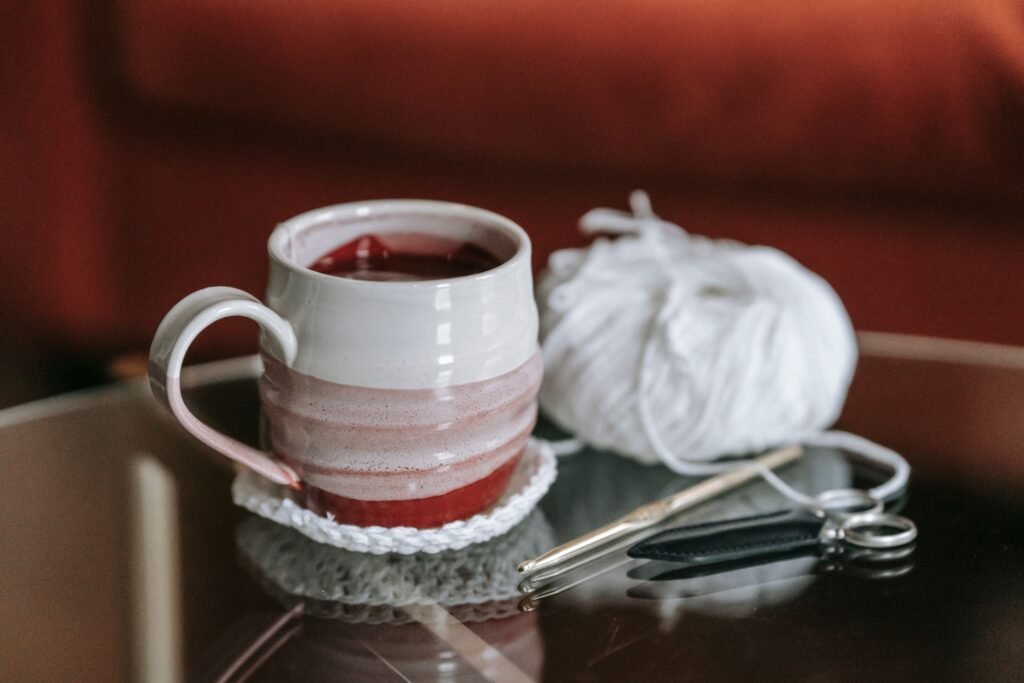
Beginners can make small crochet accessories such as pouches, cup sleeves, key fobs, flowers, scrunchies, and simple hats. These projects introduce useful construction ideas while keeping the amount of yarn and the number of decisions under control.
Pouches and small bags
A small pouch can be made from a rectangle folded and joined, two matching panels, or a simple tube worked in rounds. You can finish it with a button, flap, drawstring, or another closure that suits your skill level. Start with a basic shape and treat the closure as a separate learning step.
Pay attention to the fabric. A very open stitch may be attractive but may not hold small items securely, while a dense stitch can create a sturdier pouch. Make a small sample if you’re unsure how the yarn and stitch will behave together.
Flowers and appliqués
Flowers are excellent small projects for practicing increases, chains, loops, and shaping. They can become hair accessories, bag decorations, gift toppers, or embellishments for a hat or blanket. A crochet poppy flower guide can inspire you to explore layered petals and think about how a small motif can be used in several ways.
If a multi-layered flower feels too advanced, begin with a simple flat flower made from a center and a few petals. The goal is to understand how the shape grows, not to include every possible detail at once.
Hats and ear warmers
A hat introduces working in rounds, shaping, and checking fit. It can be a rewarding next project after a few flat pieces, but don’t rush the measuring stage. The fabric needs to reach the intended size and shape before the crown is closed. Ear warmers are a gentler alternative because they can often be made from a band with less shaping.
For more ideas, browse these free crochet hat patterns for beginners. Notice how different stitch textures and finishing details change the look of a simple silhouette.
Key fobs and charms
Small hearts, stars, leaves, and geometric shapes make cheerful key fobs or bag charms. They are a good place to practice increasing and decreasing on a tiny scale. Reinforce the attachment point carefully and choose a shape that remains recognizable even when made with a small amount of yarn.
What yarn and tools should beginners use?
Beginners should use yarn and tools that make the stitches easy to see and the fabric comfortable to handle. A smooth yarn in a clearly visible color is often easier for learning than a very fuzzy, highly textured, or extremely dark yarn because you can identify the stitch tops and spaces more readily.
Choose a hook that matches the pattern or yarn guidance, then pay attention to how the fabric feels rather than treating the suggested hook as the only possible choice. A tighter hook may create firmer fabric, while a looser tension may create more drape and visible spaces. The right choice depends on the project, so a small sample is useful whenever fabric character matters.
Keep your beginner toolkit simple:
- A crochet hook that feels comfortable in your hand.
- Smooth yarn that allows the stitches to show clearly.
- Scissors for cutting the yarn cleanly.
- A yarn needle for weaving in ends and joining pieces.
- Stitch markers for identifying round beginnings or important spaces.
- A measuring tape for checking the growing project.
You don’t need every accessory before you begin. A hook, yarn, scissors, and a needle are enough for many small projects. Add stitch markers when counting becomes difficult; removable markers can also help you identify the first stitch of a row or round.
When choosing yarn from your stash, sort it by texture, color, and approximate amount. Avoid combining strands that behave very differently until you have made a sample. Leftover yarn is wonderful for small crochet projects, stripes, flowers, and motifs, but using it intentionally will make the finished fabric more consistent.
Which crochet stitches should beginners learn first?
Beginners should first learn the chain stitch, slip stitch, single crochet, half double crochet, and double crochet. These stitches create a useful foundation for many patterns, and learning how they look in the fabric is just as important as memorizing how to make them.
The chain stitch forms foundations, spaces, turning chains, and decorative details. Single crochet creates a compact fabric and makes it easier to see how each stitch is anchored. Half double crochet offers a taller row while remaining relatively straightforward. Double crochet grows more quickly and creates a fabric with more height and openness.
Practice one stitch at a time on a small rectangle. Watch for the two loops at the top of each stitch, and count those loops rather than guessing from the spaces below them. This habit makes it easier to find the correct insertion point and maintain straight edges.
Once basic stitches feel familiar, try a simple increase or decrease. An increase places more than one stitch in a location to widen the fabric. A decrease combines stitches to narrow it. If you want a clear explanation of shaping, this crochet decrease guide covers common decrease ideas and ways to keep the shaping neat.
You can also explore taller stitches when you’re ready. The treble crochet guide can help you review the stitch sequence before using it in an open fabric, decorative stripe, or small motif. Work a sample first so you can see how the stitch changes the height and spacing of your fabric.
How can beginners avoid common crochet problems?
Beginners can avoid common crochet problems by counting regularly, checking the first and last stitch of every row, using markers when needed, and stopping to correct mistakes early. Small checks are much easier than trying to repair a project after several rows have hidden the problem.
Uneven edges
Uneven edges often happen when the first or last stitch is missed or when a turning chain is counted differently from the pattern instructions. Before starting each row, identify where the hook should enter. At the end, count the stitches and compare the width with the previous row.
Too-tight chains
A tight foundation chain can make the first row difficult to work and may cause the bottom edge to pull inward. Try relaxing your grip, using a slightly larger hook for the foundation if the pattern allows it, or practicing chains separately before beginning the project.
Confusing the front and back
Some crochet textures look different on each side. Place a removable marker on the front or the right side when you begin, especially if the pattern asks you to turn or repeat a particular row. This small habit can prevent a lot of confusion.
Incorrect stitch counts
If the stitch count changes unexpectedly, stop and count the current row. Look for a missed stitch, an accidental increase, or a skipped space. Don’t assume the issue will disappear in the next row. Undoing a few stitches now is usually less frustrating than reshaping a much larger section later.
Ignoring the finished shape
A project can have the correct stitch count and still feel different from what you imagined if your tension is very different from the pattern’s. Lay the piece flat, measure it when the pattern gives measurements, and compare the fabric with the intended use. A small swatch can reveal this difference before you invest much time.
How can you build confidence with easy crochet projects?
You can build confidence with easy crochet projects by repeating familiar skills, changing only one element at a time, and allowing yourself to learn through imperfect pieces. Every project does not need to become a gift or a finished masterpiece. Practice has value even when the result becomes a sample, a decoration, or a reminder of what you learned.
Try creating a small progression:
- Begin with a flat rectangle using one basic stitch.
- Make a second rectangle and focus on keeping the edges more even.
- Try a square, coaster, or bookmark with a simple border.
- Practice changing color or joining two pieces.
- Work a small project in rounds, such as a flower or hat.
- Add one shaping technique, such as an increase or decrease.
This approach keeps each new challenge connected to something you already understand. If a pattern introduces several unfamiliar ideas at once, simplify it for practice. Use one color, replace a complex border with a basic one, or make a smaller sample before returning to the full project.
When you’re ready to try a larger handmade project, the construction ideas in these small crochet projects can help you choose a manageable stepping stone. You might turn a motif into a pouch, a flat panel into a cowl, or a simple stitch sample into a useful cloth.
What should you make after your first crochet project?
After your first crochet project, choose something that repeats one familiar skill and adds only one new idea. This keeps the learning curve encouraging while still giving you a sense of progress.
- Choose a coaster or washcloth if you want more practice with even rows.
- Choose a small pouch if you want to learn joining and closures.
- Choose a flower or charm if you want to practice shaping in miniature.
- Choose an ear warmer if you want to make a wearable band.
- Choose a hat if you’re ready to work in rounds and check fit.
- Choose a scarf or cowl if you enjoy steady, repetitive rows.
Keep your expectations friendly and practical. Read the pattern before starting, make a sample when the fabric matters, count often, and give yourself permission to unravel a section. Crochet becomes much less mysterious when we slow down enough to notice what the stitches are telling us.
For your next project, gather a smooth yarn, choose a shape you’ll enjoy using, and begin with one clear goal. Maybe you’ll practice straighter edges, try a new color, or learn your first decrease. With each small finish, you’ll have more confidence to explore patterns, textures, and designs that feel uniquely yours.