Size 10 Crochet Thread: Beginner’s Guide
Learn how to choose, hold, and crochet with size 10 crochet thread, from hooks and tension to beginner projects, mistakes, finishing, and care.
Size 10 crochet thread is a lovely place to begin exploring delicate crochet, especially if you enjoy small motifs, lace-like textures, ornaments, edgings, and detailed accessories. It is finer than the yarn many beginners first pick up, so it asks for a little more patience and attention, but it also opens the door to a different kind of crochet rhythm.
In this beginner’s guide, I’ll explain how to choose a hook, manage your tension, read a pattern, and decide whether a project is a good match for your current skills. I’ll also share practical ways to make size 10 crochet thread feel less intimidating. You don’t need to rush. With a comfortable grip, good lighting, and a small practice swatch, you can build confidence one stitch at a time.
Table of Contents
What Is Size 10 Crochet Thread?
Size 10 crochet thread is a fine thread commonly used for detailed crochet projects, and it is best approached as a material that rewards small, controlled stitches rather than speed.
When you first handle it, the thread may feel very different from standard yarn. It can seem delicate, and the stitches are smaller and easier to overlook. That does not mean it is unsuitable for beginners. It simply means that your eyes, hands, and hook need to work a little more closely together.
The number in the name is part of the thread’s sizing system, so don’t assume that a size 10 thread works exactly like a yarn with a similar-sounding label. Always check the project instructions, the thread label, and the recommended hook before starting. Designers may build a pattern around a particular thread thickness and tension.
Size 10 thread can be used for decorative and practical makes, including small flowers, motifs, coasters, bookmarks, ornaments, trims, and lace-inspired pieces. The right project depends on the pattern, your chosen materials, and the fabric you want to create. If you enjoy small makes, you may also like browsing these small crochet projects for inspiration before choosing your first thread project.
One important distinction is that thread crochet is not simply “tiny yarn crochet.” The smaller scale changes how you count, how firmly you hold the work, and how easily you can see the loops. Give yourself permission to slow down while you learn.
How Should Beginners Choose a Hook for Size 10 Crochet Thread?
Beginners should choose a hook by following the pattern or thread label first, then adjusting only after making a small test swatch.
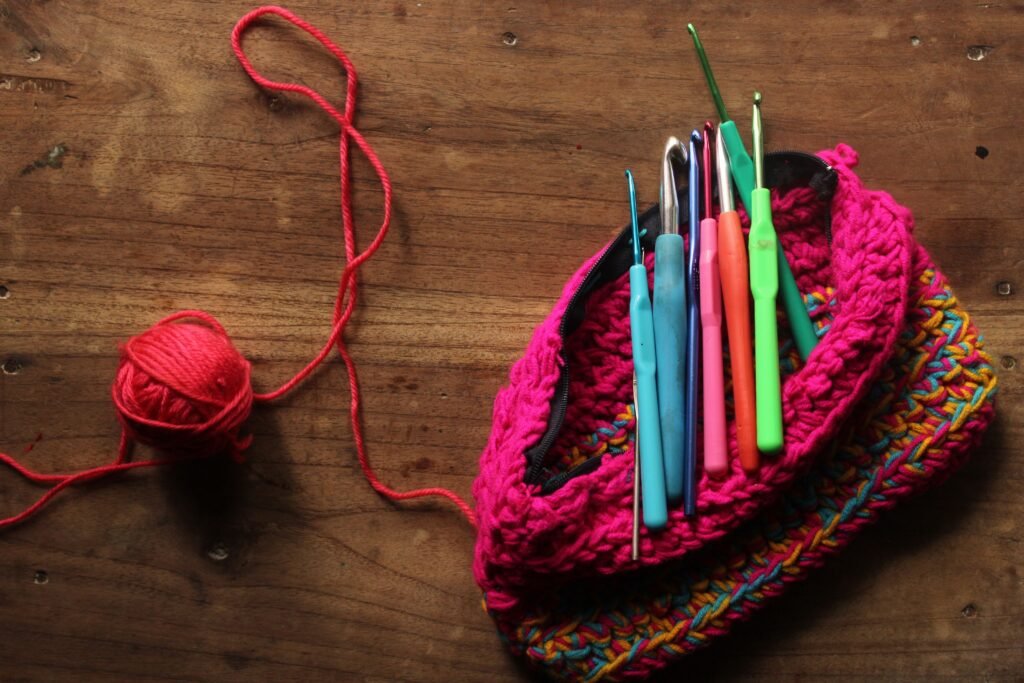
There is no single hook that will suit every project made with size 10 crochet thread. The pattern may be designed for a particular fabric, and changing the hook can alter the openness, firmness, and overall scale of your work. If you are following a pattern, treat its recommended hook as your starting point rather than guessing from the finished photograph.
For practice, choose a hook that feels easy to control in your hand. A very small hook may require more precision, while a slightly different hook can change the way the thread slides and how clearly you can see each stitch. The goal is not to force the thread into a particular tension. The goal is to create a fabric that matches the pattern or suits your own design.
Handle the hook gently. A tight grip can make your hand tired and may pull the thread so firmly that the next stitch becomes difficult to enter. Keep your shoulders relaxed, support the work close to the active stitch, and let the hook do the turning rather than twisting your whole wrist.
If you are unsure whether your hook and thread work well together, make a short row of basic stitches. Look at the tops of the stitches and the spaces between them. If the loops are difficult to draw through or the fabric feels rigid, try a different hook only if the project allows experimentation. Record what you used so you can repeat a combination that feels comfortable.
What Supplies Make Thread Crochet Easier?
The supplies that make thread crochet easier are a suitable hook, smooth thread, sharp scissors, a yarn or tapestry needle, stitch markers, good lighting, and a clear pattern.
- A comfortable hook: Choose a handle that lets you hold the tool without squeezing it.
- Good lighting: Bright, even light makes small loops easier to identify and can reduce eye strain.
- A light-colored practice thread: A clear shade can make stitch placement easier to see than a very dark color.
- Stitch markers: These are useful for round beginnings, corners, repeats, and special stitches.
- A measuring tool: Use it to compare your swatch or motif with the pattern’s instructions.
- A small notebook: Record your hook, thread, stitch count, and any changes you make.
Keep your working thread moving freely. If the thread catches on a rough surface or becomes tangled beside you, the repeated stopping and pulling can affect your tension. A small bowl, thread holder, or simply a clear space beside your chair may make the work more pleasant.
Read the complete pattern before beginning. Look for the stitch key, terminology, repeats, turning instructions, and finishing notes. If abbreviations slow you down, keep a crochet abbreviations guide nearby, while remembering that the individual pattern’s key should always be your main reference.
A small notebook is particularly useful when working thread projects because it is easy to forget where a tiny repeat begins. Write down the last completed round or row before putting the project away. That simple habit can save you from having to inspect every small stitch when you return.
How Do You Control Tension With Size 10 Crochet Thread?
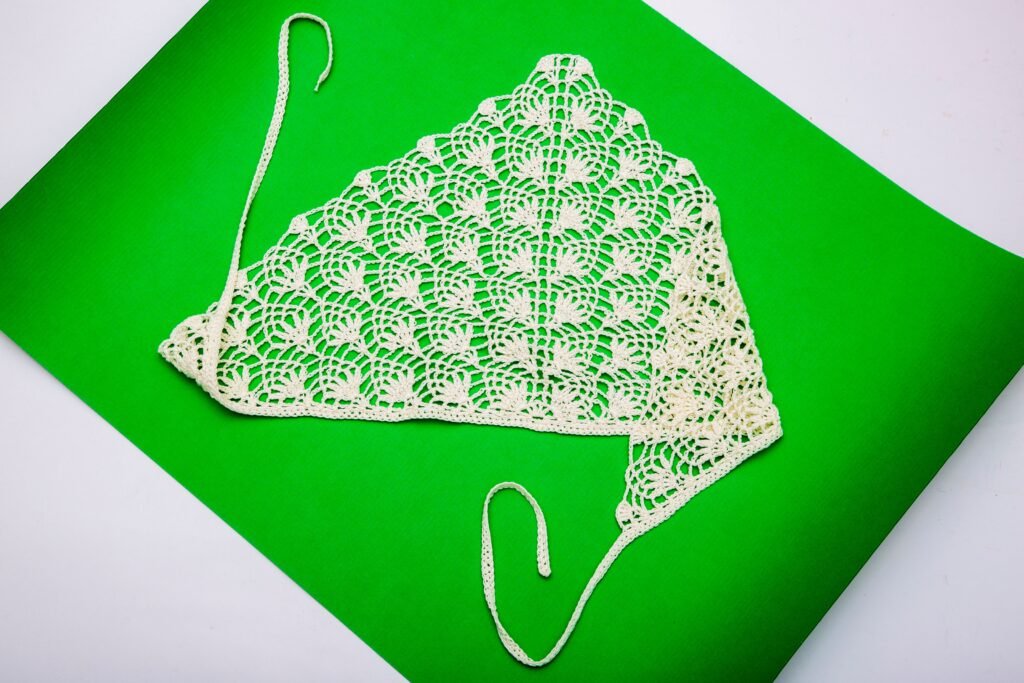
You control tension with size 10 crochet thread by keeping your yarn hand relaxed, maintaining consistent loop height, and checking the developing fabric instead of pulling every stitch as tightly as possible.
Many beginners assume that fine thread should be held tightly so the stitches look neat. In practice, overly tight tension can make the hook difficult to insert and can leave the finished fabric stiff or puckered. A relaxed but controlled hold gives you room to complete each movement without fighting the thread.
Try to keep the loop on your hook at a consistent height. If one loop is pulled high and the next is held close to the hook, the stitches may vary noticeably. You don’t need to measure every loop. Simply pause occasionally and look across the row for a steady rhythm.
Count as you work, particularly around corners and in small motifs. A missed stitch or accidental extra stitch can change the shape quickly. Place a marker at the start of a round if the pattern uses joined rounds, and make a note of whether the turning chain counts as a stitch.
Take regular breaks. Thread crochet can invite intense concentration, especially when you are searching for a small insertion point. Set the work down, relax your fingers, and look away for a moment. Comfort matters because tired hands often lead to tighter tension and more mistakes.
Make a practice swatch or motif before judging your technique. The first few stitches may feel awkward, but repetition gives your hands a chance to find a consistent motion. Rather than aiming for speed, aim to make each stitch in the same sequence.
Which Beginner Projects Suit Size 10 Crochet Thread?
The best beginner projects for size 10 crochet thread are small, clearly written designs with manageable stitch repeats and limited shaping.
A flat motif, simple edging, coaster, bookmark, or small flower can give you useful practice without asking you to maintain a large fabric. Small projects also let you test the thread and hook combination before committing to a larger piece. Look for instructions that identify stitch counts and explain where each round begins and ends.
Flowers are a friendly starting point because the petals often repeat. You can focus on making one section, then use it as a visual guide for the remaining sections. For another small floral idea, explore this five-petal crochet flower pattern. Even if you adapt the materials, the project can encourage you to think about repeated shapes, joining, and neat finishing.
Decorative thread crochet can also introduce you to increases, decreases, chain spaces, and working into corners. Those skills transfer to more intricate motifs later. Start with a design where the stitch repeat is easy to identify rather than choosing the most complicated photograph you can find.
If you are interested in stitch practice, a size 10 thread swatch can help you compare how different stitch heights behave. You might work a few basic rows and then try a taller stitch in a small section. A guide to extended double crochet can help you understand one stitch variation, though you should follow the pattern’s instructions if it uses a different construction.
Wearable projects can be rewarding, but they may not be the calmest first experiment because fit and repeated stitch counting become more important. If you are curious about crochet clothing, browse a beginner crochet socks pattern guide to see how sizing, construction, and measuring affect a project. You can return to thread garments after you feel comfortable with the material.
How Can You Read and Finish a Thread Crochet Pattern?
You can read and finish a thread crochet pattern more confidently by preparing the materials first, marking important locations, checking your count, and weaving in ends with care.
Begin by identifying the pattern’s terminology. Crochet instructions may use different regional terms, so check whether the designer uses US or UK terminology. Then highlight the size, hook, thread, and stitch-count information that applies to your project. This prevents you from accidentally following a nearby number meant for another option.
Read repeats literally. If an instruction says to repeat a section around the round, mark the beginning and look for the same sequence as you move along. Thread crochet can look visually complex, so counting the stitches or spaces is often more dependable than trying to copy the shape by sight.
When a mistake appears, pause before undoing a large section. Compare the current round with the previous one and locate the first point where the stitch count changes. Because thread projects are small, it may be tempting to pull everything out immediately, but finding the exact problem teaches you more about the pattern.
Finishing deserves as much care as the crocheting itself. Secure the final loop according to the pattern, then weave in the end through the wrong side or an area where it will be less visible. Avoid pulling so tightly that the motif gathers. Trim only after the end feels secure.
Blocking may help a finished motif show its shape, but follow the pattern and material guidance before applying moisture or stretching. Test your finishing approach on a small sample when possible. Not every thread or fabric responds in the same way, so avoid treating blocking as an automatic step.
Small thread pieces can also be joined into larger designs. If you enjoy exploring wearable layers after practicing motifs, these crochet poncho free patterns offer ideas about panels, borders, color planning, and construction. The projects may use different materials, but the planning habits are useful across crochet.
What Common Size 10 Crochet Thread Mistakes Should You Avoid?
You can avoid common size 10 crochet thread mistakes by checking the pattern before starting, counting frequently, managing your tension, and correcting problems while they are still close to the hook.
- Choosing materials by appearance alone: A thread that looks similar to the pattern sample may still behave differently. Check the instructions and make a test piece.
- Pulling too tightly: Tight loops can make insertion difficult and may distort the fabric.
- Skipping the stitch count: Small motifs can lose their shape when one stitch disappears or an extra stitch is added.
- Missing the first or last stitch: Mark the round beginning or row edge when the pattern makes those points easy to overlook.
- Working in poor light: If the loops blur together, pause and improve your lighting rather than guessing.
- Changing several things at once: Adjust one variable at a time so you understand what caused the fabric to change.
- Rushing the finishing: Loose ends and uneven joins can distract from otherwise careful crochet.
If your work feels too tight, first relax your grip and check the loop height. If it still feels uncomfortable, make a small sample with the pattern’s recommended alternatives, if any are provided. Don’t assume that simply pulling harder or working faster will solve the problem.
If your motif is much larger or smaller than expected, compare your stitch count and tension with the pattern. The difference may come from your hook, thread, or individual stitching rhythm. Record the result before making another sample.
If you want a larger project after learning the basics, consider choosing a design with clear sections and plenty of opportunities to pause. A gradual progression from small motifs to broader fabric can make thread crochet feel much more approachable than jumping straight into a complex lace pattern.
What Should You Try Next With Size 10 Crochet Thread?
Your next step with size 10 crochet thread is to choose one small project, gather the recommended materials, and make a practice swatch or motif before beginning the full design.
Start with a light-colored thread, comfortable lighting, and a pattern that explains its repeats. Work slowly enough to identify each stitch, and keep notes about your hook, tension, and progress. If the first attempt is uneven, treat it as useful information rather than a failed project.
Once you feel comfortable, experiment with color, borders, repeated motifs, or a slightly more detailed stitch pattern. Thread crochet rewards curiosity because small changes in tension and stitch placement can create very different surfaces.
Most importantly, let the project stay small while you learn. You can always make a larger piece later. For now, focus on recognizing the loops, keeping your count steady, and finishing neatly. Those simple habits will give you a strong foundation for every delicate crochet project you explore next.